


The relevance of studying the mechanism of development of chronic prostatitis increases in direct proportion to the increase in the number of diagnosed cases of the disease.It is known that chronic prostatitis (CP) occupies a leading place among urological diseases and is the result of the influence of many factors that are an integral part of modern life (social environment, ecology, increased resistance of pathogens to antibacterial drugs).
Since the disease affects not only an increasing percentage of the male population, but also is diagnosed at an increasingly young age, there is often a rather dismissive attitude to the problem on the part of doctors who use formulated treatment schemes that cannot lead to recovery.
What is chronic prostatitis
The diagnosis of chronic prostatitis (CP) combines a rather wide range of pathological processes in the prostate gland, manifested in the form of a chronic inflammatory process of the tissues.However, we cannot talk about CP only as a result of the penetration of pathogenic microorganisms into the prostate, since this opinion justifies attempts to treat prostatitis exclusively with the help of antibiotics, which almost never brings lasting positive results.
The main factors that underlie the development of the pathology can be considered complex changes in the tissues and, accordingly, the functional abilities of the gland, which are the main reason for the development of infectious microflora.Chronic prostatitis to some extent is a collective diagnosis that combines several factors:
- Reduced immunity.
- Congestive processes in the pelvic organs.
- Violation of urodynamics.
- Degenerative processes in the prostate parenchyma.
- Trophic disorder.
- Inflammatory processes.
Mechanism of development
The penetration of pathogenic microflora into a healthy prostate gland is practically impossible to cause an inflammatory process, since the prostatic microflora has a certain resistance to pathogens present in the urethra.However, the presence of one or more of the above-mentioned provoking factors leads to the development of persistent inflammation, accompanied by the appearance of scars (fibrotization) or areas of necrosis.
The proliferation of connective tissue during the formation of a scar causes stagnation in the acini (ducts that provide secretion), aggravating the course of the disease.Necrotization of tissues leads to the formation of a cavernous cavity, in which, in addition to dead epithelium, prostatic secretion accumulates.
Thus, the main reason for the development of CP is not an infection, but various physiological disorders that allow the inflammatory process to acquire a chronic form.
Another distinctive feature of the disease that makes diagnosis difficult isflow frequency.As a rule, under the influence of external factors or the internal state of the body, there is a periodic change in the intensity of the pathology, during which acute conditions are replaced by periods of remission.
Often there is not only a complete absence of symptoms, but also a lack of laboratory parameters indicating the presence of infection (for example, white blood cells).Despite the positive results, this condition cannot be considered a recovery, since all physiological disorders in the gland remain unchanged.
Reasons
The main causes of blood circulation disorders in the pelvic organs and venous blood stagnation in the prostate gland are:
- Constantly sits in a sitting position.
- Hypothermia of the whole body or directly in the pelvis.
- Systematic constipation.
- Prolonged abstinence from sexual activity or excessive sexual activity.
- The presence in the body of a chronic infection of any localization (sinusitis, bronchitis).
- Excessive physical activity accompanied by lack of sleep or rest, which leads to suppression of the immune system.
- History of urogenital infections (gonorrhea, trichomoniasis).
- Toxic effects on the body due to systemic consumption of alcoholic beverages.
The presence of any of these reasons leads to the appearance of stagnant processes, deterioration of the excretory function of the glands and a decrease in cellular resistance to diseases, which contributes to the creation of optimal conditions for the spread of pathogenic microorganisms in the prostate gland.
Is it possible to treat chronic prostatitis?
Despite the availability of a large amount of systematic information on the mechanism of CP development,its treatment is extremely difficultand is one of the leading problems in modern urological practice.
Due to the fact that the disease progresses in each individual patient according to an individual pattern, accordingly, the approach to treatment must be individual, taking into account all the physiological changes that have occurred in the prostate gland.
The anatomical features of the prostate, which can be accessed either through the urethra or through the rectum, significantly reduce the effectiveness of the therapeutic effect used.In this regard, to achieve a relatively stable result, a long course of treatment (usually several months) is required, during which the patient must strictly comply with all the doctor's requirements.

Unfortunately, a complete cure can only be achievedin 30 cases out of 100.This is mainly due to the late seeking of medical help, due to the prolonged absence of severe symptoms or the conscious avoidance of unpleasant diagnostic and then therapeutic procedures.As a rule, during treatment, atrophic processes in the prostate are irreversible, and even with long-term treatment, it is only possible to completely eliminate the symptoms and achieve a stable remission, the duration of which depends on the patient's compliance with the doctor's recommendations.
Treatment
The complex of measures used in the treatment of CP includes:
Antibacterial therapy
Suppression of the activity of the bacterial microflora with the help of antibiotics should be carried out only after a set of laboratory tests, based on the results of which the most effective drug is prescribed.
As a rule, the duration of taking antibiotics is determined by the severity of the disease and is at least 30 days.It is unacceptable to interrupt the treatment, because the remaining microorganisms will become resistant to this group of drugs, and subsequently they will have to be replaced and an even longer course.In the treatment of prostatitis, antibiotics that have a bactericidal effect are preferred:
- fluoroquinolones;
- azalides;
- aminoglycosides;
- Tetracyclines.

If laboratory tests reveal a specific nature of the infection, for example, trichomoniasis or viral origin of prostatitis, nitroimidazoles or an antiviral drug are prescribed in parallel with antibiotics.
The use of antispasmodics and α-blockers
The main purpose of using drugs from this series is to relieve spasms in the pelvic floor, which helps to increase blood supply, improve urine flow and reduce pain.
laxatives
To avoid excessive stress on the pelvic muscles that occurs during defecation, it is recommended to use laxatives, as pressing during constipation can worsen the patient's condition.
Physiotherapy
One of the most common methods of physiotherapy is rectal massage of the prostate gland.The therapeutic effect of the finger on the prostate, carried out through the anus, is expressed in squeezing out the infected secretion, which is subsequently released through the urethra.
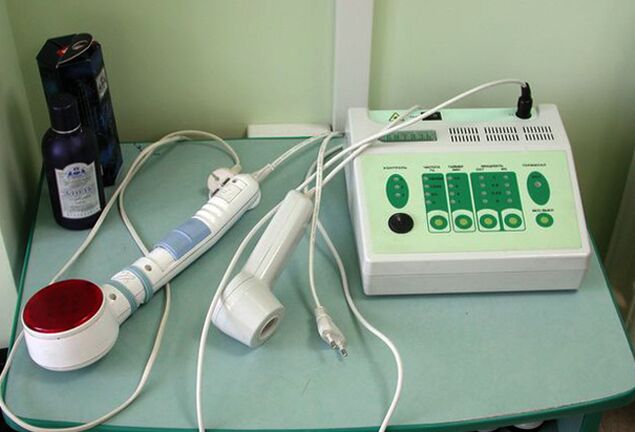
In addition, during the massage, the blood supply to the tissues increases, which has a positive effect on the antibacterial therapy.The following physiotherapeutic methods are also used to perform rectal massage of the prostate:
- Simulation of electric current.
- High frequency thermotherapy.
- Infrared laser therapy.
Prevention
After stabilization of the condition, the patient is obliged to follow the rules that impose some restrictions on the usual way of life:
- Avoid water procedures in open water bodies and pools.
- Check with your doctor regularly.
- Stop drinking alcohol completely.
- Have a regular sex life with one partner.
Compliance with the rules will allow you to remain in remission as long as possible and avoid exacerbation of the disease.